
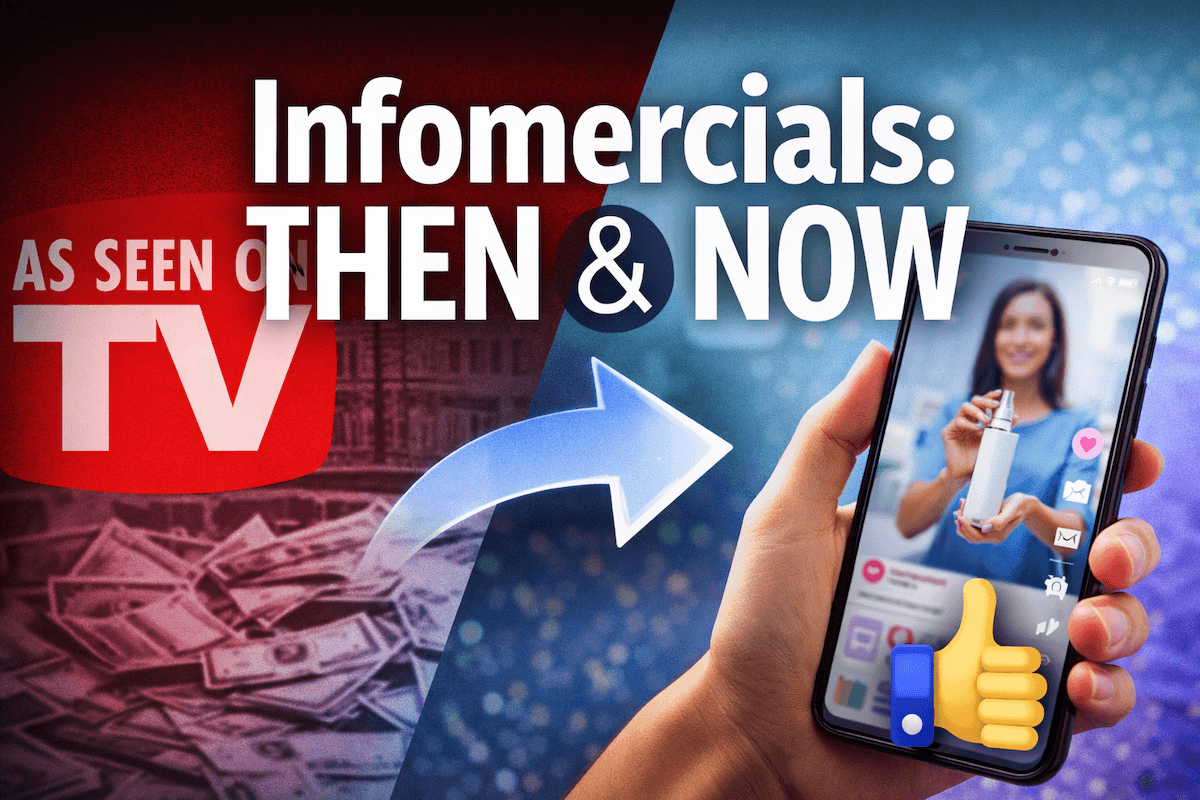
For a long time, the word infomercial carried baggage.
Say it out loud and people pictured miracle cures, exaggerated promises, and breathless announcers selling solutions that sounded too good to be true. Somewhere between late-night TV and pop-culture parody, infomercials picked up a reputation they never quite shook.
But here’s the truth—infomercials didn’t fail consumers. Bad actors failed the infomercial format.
And in today’s more transparent, data-driven marketplace, the format is quietly earning a second look.
How Infomercials Earned a Bad Name
In the early boom years of direct response television, the barrier to entry was low and the upside was enormous. If a product could get on air and generate phone calls, it could scale fast.
That environment created innovation—but it also created excess.
- Overstated claims that couldn’t be substantiated
- Poor fulfillment and customer service
- Dubious “free trial” offers that confused consumers
- Lack of regulatory oversight in the early days
A handful of high-profile scandals did real damage. The format became the punchline, not the product. Late-night comedians mocked it. Pop culture turned it into shorthand for hype.
Unfortunately, legitimate brands—many delivering real value—got lumped in with the worst examples.
The Core Format Was Never the Problem
Strip away the bad behavior and you’re left with something powerful:
- Demonstration-based selling
- Clear problem-solution storytelling
- Measurable response
- Performance accountability
That’s not a scam—that’s direct marketing fundamentals.
Infomercials worked because they did what traditional advertising often didn’t: they explained, proved, and asked for action. The issue wasn’t the format. It was trust.
Why the Infomercial Is Ready for a Comeback
Fast-forward to today, and the environment has changed—dramatically.
1. Transparency Is No Longer Optional
Modern consumers can fact-check in seconds. Reviews, unboxings, Reddit threads, and social proof live forever. That forces better products and cleaner offers.
2. Regulation Is Clearer and Stronger
FTC guidelines, platform policies, and compliance standards are far more defined. The “Wild West” days are over—and that’s a good thing.
3. Performance Is Fully Trackable
Every impression, click, view-through, and conversion can be measured. Modern DRTV isn’t guessing—it’s optimizing in real time.
4. Video Commerce Is Everywhere
TikTok, Instagram, YouTube, Amazon Live—today’s consumers don’t just tolerate long-form video selling, they engage with it. The modern infomercial just doesn’t always look like a 30-minute TV block.
5. Credibility Is Built Into the Creative
Real customers. Real demos. Real experts. Real guarantees. The new infomercial doesn’t shout—it explains.
The Modern Infomercial Looks Different (And Better)
Today’s infomercial might be:
- A 90-second shoppable video
- A connected-TV spot driving to a landing page
- A livestream demo with live Q&A
- A long-form explainer embedded on a product page
But the DNA is the same: education, demonstration, and accountability.
The brands winning now understand that credibility converts better than hype—and that long-term customer value matters more than short-term calls.
Reclaiming the Word “Infomercial”
The irony is that many of the most successful modern brands are using infomercial techniques—they just don’t call them that.
They should.
Because when done right, an infomercial isn’t manipulation. It’s information plus commerce. It’s showing your work. It’s earning the sale.
The next era of infomercials won’t be remembered for scandals.
It’ll be remembered for transparency, performance, and trust.
And this time, the format gets the credit it deserves.





Leave a Reply