
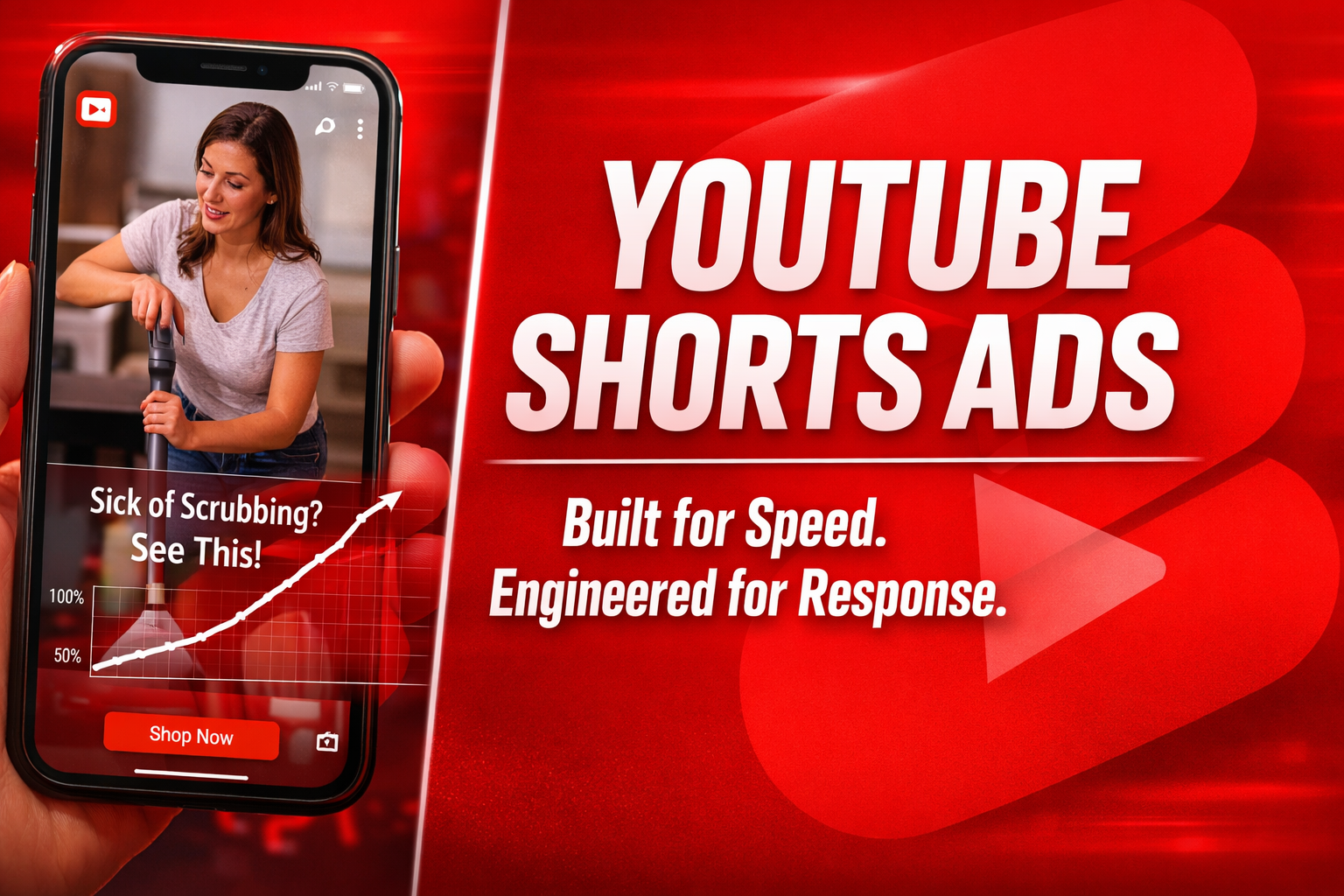
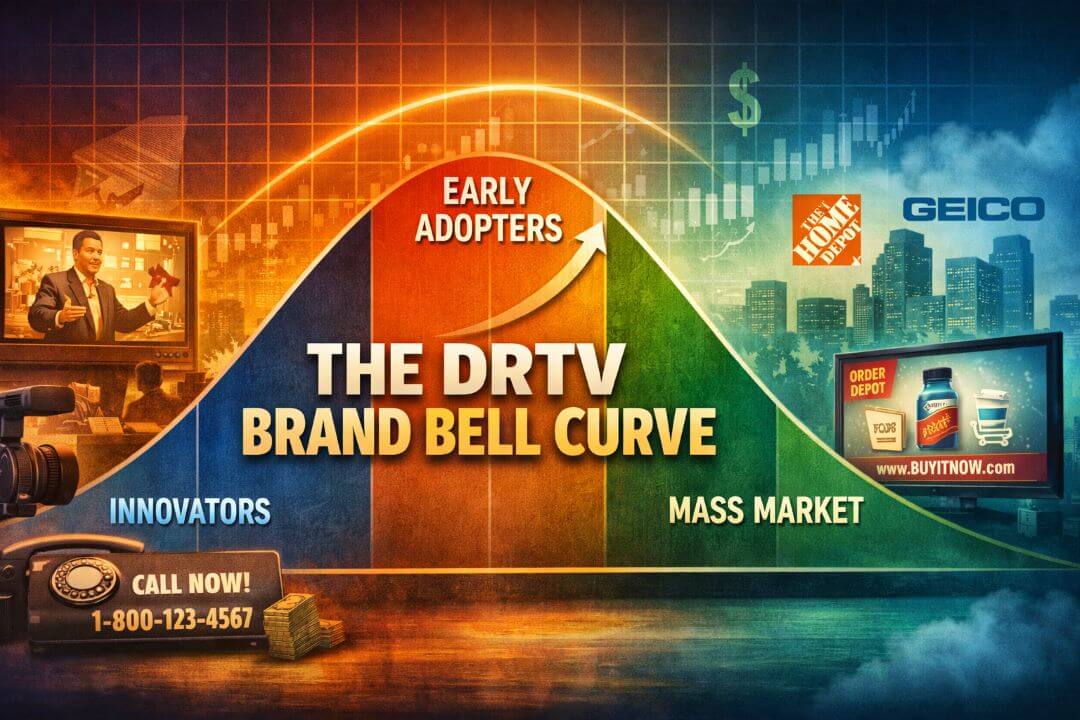
For decades, direct response television trained us to think in arcs: open strong, agitate the problem, demonstrate the solution, stack the offer, close with urgency.
Now that same persuasion model is being compressed into 15–30 seconds inside the vertical scroll of YouTube Shorts. And many seasoned DRTV marketers are getting it wrong — not because they don’t understand response, but because they’re applying television logic to an algorithmic feed.
Shorts Are Not “Mini Infomercials”
The biggest misconception I see is this: “We’ll just cut down our TV spot.” That rarely works.
YouTube Shorts ads live inside a swipe environment. The viewer didn’t opt in. They’re grazing. In DRTV terms, this isn’t a scheduled time slot — it’s a moving conveyor belt.
The Algorithm Is Your New Media Buyer
In traditional DRTV, we negotiated rates, optimized dayparts, and scaled based on call volume and MER. With Shorts, the algorithm evaluates creative performance in real time:
- Hook retention (first 1–3 seconds)
- Watch-through rate
- Engagement signals
- Viewer behavior after exposure
Weak creative won’t be saved by media weight. Scale only happens after proof.
The First 3 Seconds Replace the Cold Open
On TV, we had time to set context. On Shorts, you have roughly 1.5 seconds before the thumb moves.
- Lead with visual proof
- Make a bold claim
- Create immediate tension
- Show outcome before explanation
Compressing the Direct Response Formula
The structure still works — it just moves faster.
- Interrupt (0–3 sec) – Outcome or tension first.
- Problem Recognition (3–7 sec) – Make the viewer feel understood.
- Demonstration (7–18 sec) – Show proof.
- Credibility (18–24 sec) – Testimonial or authority cue.
- Direct CTA – Clear next step.
Why Shorts Matter to DRTV Operators
Shorts can serve as:
- A low-cost offer validation tool
- A creative testing lab
- A feeder into long-form YouTube ads
- A top-of-funnel awareness engine
The smartest brands use Shorts as their R&D department before scaling into OTT or traditional television.
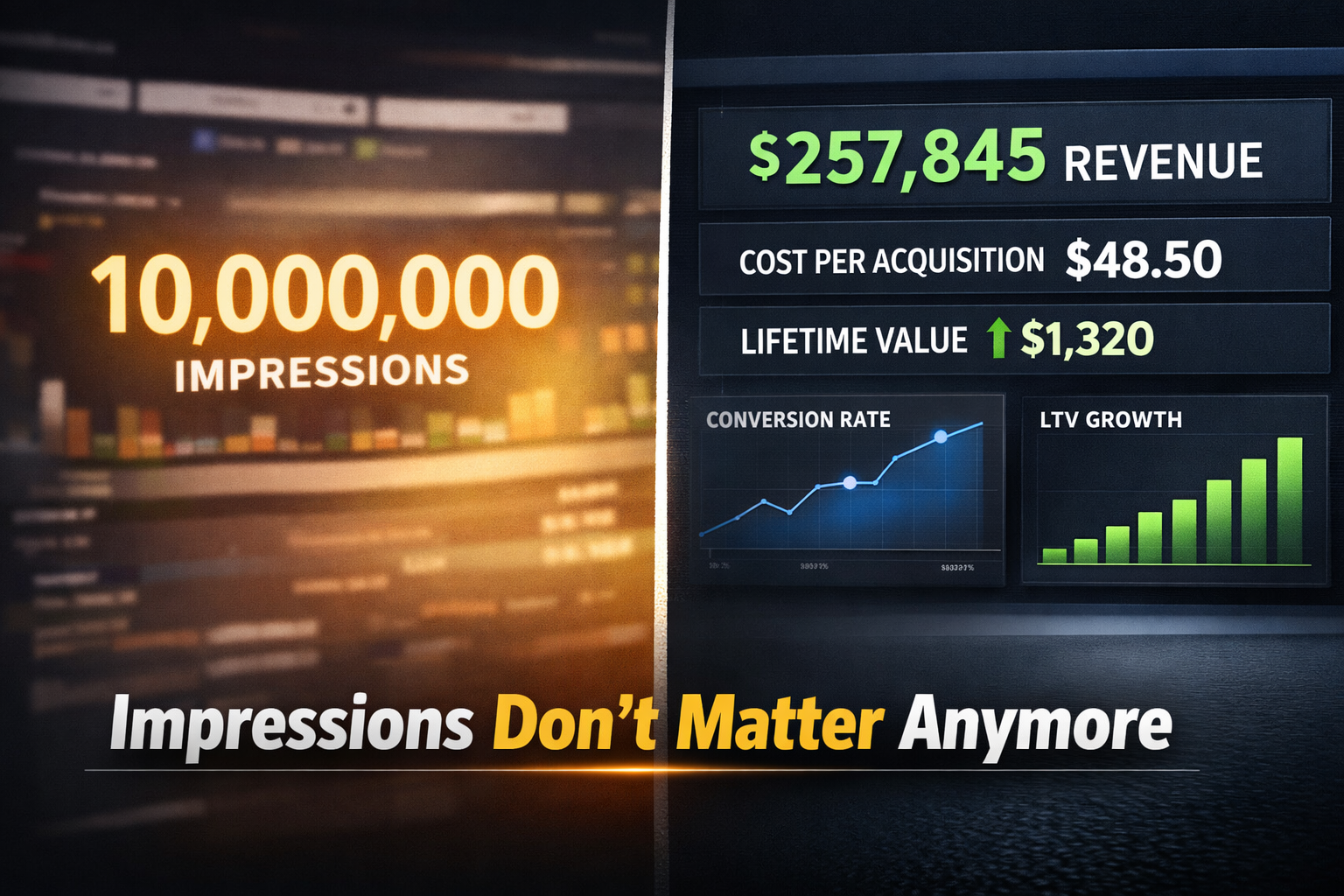
Metrics That Actually Matter
- 3-second retention rate
- 25% completion rate
- Click-through rate
- View-through conversions
- Creative fatigue speed
If retention collapses at 2 seconds, nothing else matters.
Final Word
Short-form vertical video is not a trend. It’s a distribution shift. The marketers who master compression — without losing persuasion — will control the next era of direct response.




Leave a Reply